Healthcare service
The process that almost worked
Atrium Medical had managed their Vienna device fleet the same way for six years. It wasn't broken. It just no longer worked — and the difference cost more than anyone had stopped to calculate.
Artium Medical
Vienna, Austria
Artium Medical
Vienna, Austria
Since 2014
Founded
2014
Sector
Healthcare service
Team
18
devices
340
hospitals
12
on mediora since
Atrium Medical had been running the same coordination process for six years when they decided it was no longer working. Not broken — not exactly — but no longer working. The difference matters. A broken process announces itself. A process that no longer works just quietly costs more than it should, every week, until someone stops to add it up.
Stefan Bauer, Atrium's Service Operations Director, stopped to add it up in early 2024. The number surprised him.
The problem with processes that almost work
Coordination that lived in inboxes
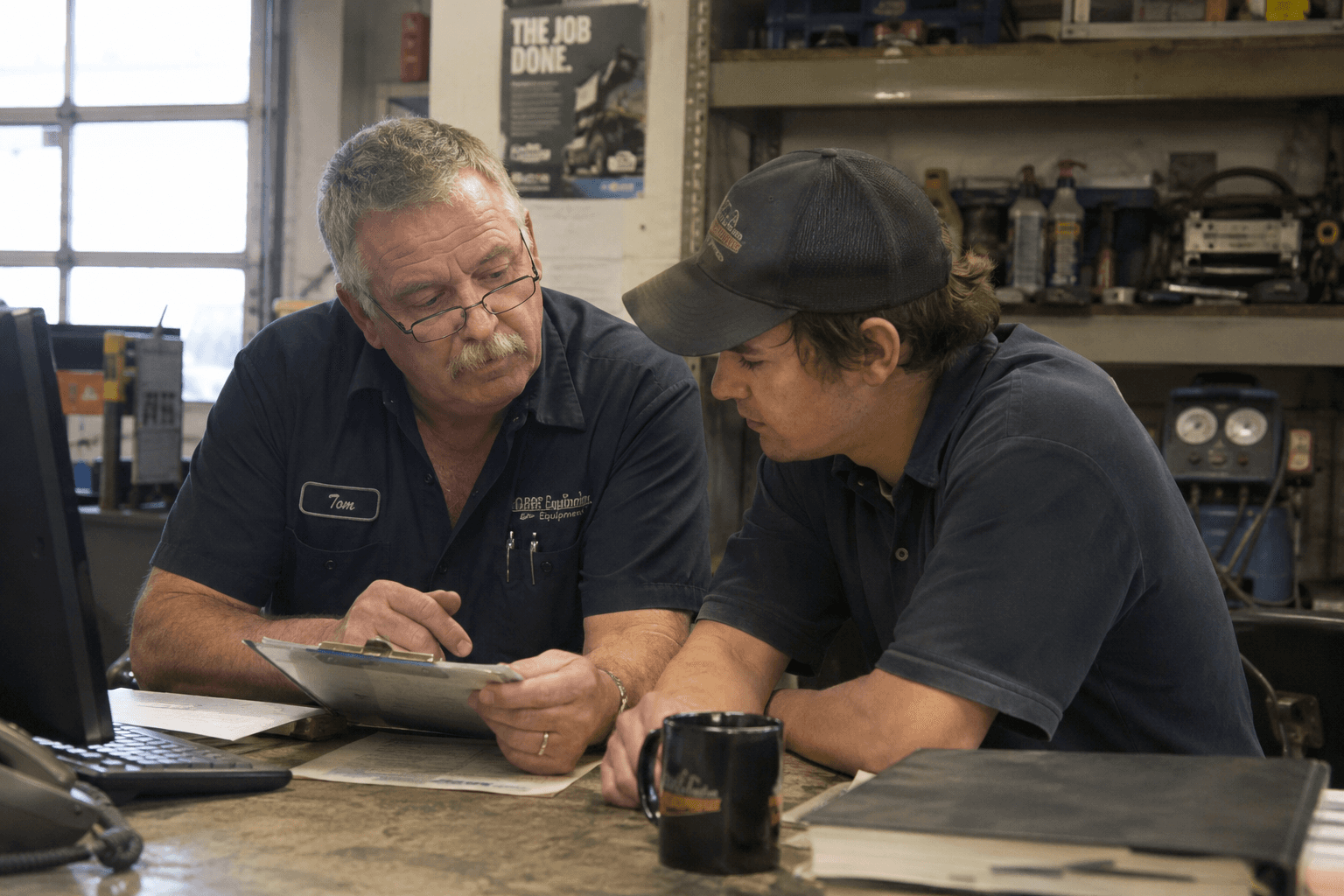
For most of its history, Atrium Medical had managed its Vienna-area device fleet the way most independent service organisations do: a combination of email threads, a shared calendar, and a master spreadsheet that one person knew how to navigate correctly. It worked well when the team was small. By the time Stefan joined, the team had grown to eighteen technicians across four sites, and the spreadsheet had become something no single person fully understood.
"We had columns in there that nobody could explain," he says. "They'd been added by someone who left two years ago. We were afraid to delete them in case they were doing something important."
The fear of deleting an unexplained column is, in its way, a precise description of a team that has outgrown its system.
The coordination tax
What the old system cost Atrium wasn't dramatic. There was no single failure, no incident report, no close call that forced a change. The cost was distributed and quotidian: thirty minutes each morning for the coordinator to reconcile yesterday's job completions against the schedule. Fifteen minutes per technician per week spent calling the office for information that should have been on their phone. An hour every Friday to produce a status report that was outdated before it was sent.
Stefan estimated that roughly a quarter of his team's working time was spent on coordination rather than service. He wanted that number lower.
What switching looked like in practice
The first six weeks
Atrium went live on Mediora in October 2024. The first six weeks, Stefan describes as "expectation management" — not because the software didn't work, but because changing how a team works is slower than changing what tools they use. The technicians who had been with Atrium longest were the most sceptical. They had seen systems come and go and had learned, reasonably, not to invest in them before they proved themselves.
The proof came in week four, when a technician at the Währing site handled a full day of calls — including an unplanned equipment fault — without calling the office once. Everything they needed was on the device record. Parts availability, site contact, service history, contract terms. The call to the office that didn't happen was more persuasive than any training session.
What the team noticed first
The coordinator noticed the schedule first. Instead of rebuilding it each morning, she reviewed it. The distinction is small and significant: one is creation, the other is verification. The cognitive weight is different. She described the first week she stopped rebuilding the schedule as "the first week I felt like I was actually doing my job instead of maintaining the conditions for my job."
The technicians noticed the device records. Specifically, they noticed that the device records remembered things they would otherwise have had to remember themselves — or call someone to find out.
The results, six months in
Atrium's coordination overhead dropped from roughly twenty-five percent of team time to under ten. The Friday status report now takes twelve minutes to generate rather than an hour, and Stefan sends it on Thursday instead. They onboarded a fifth site in February 2025 without adding headcount.
The unexplained spreadsheet columns were deleted in November. Nothing broke.
"We'd been maintaining a system that was mostly working," Stefan says. "We didn't realise how much energy that was taking until we stopped."
What they would do differently
One thing: they would have involved the senior technicians in the configuration earlier. The settings Atrium finalised in week three were different from the settings they started with, because the technicians had opinions about how job queues should be ordered and which device fields mattered most on-site. Those opinions improved the setup. Getting them earlier would have shortened the adjustment period.
"The people who know what information they need in a hospital corridor," Stefan says, "are the people who stand in hospital corridors. We should have asked them sooner."
from the interview
Q.
What made you decide the old system wasn't working anymore?
A.
It wasn't a single moment. It was a calculation I did in early 2024 — how much of the team's time was going to coordination rather than actual service work. The number was around twenty-five percent. That was the moment.
Q.
How did the field technicians adapt?
A.
The longest-tenured ones were the most sceptical at first, which made sense — they'd seen tools come and go. What changed things was week four, when one of them handled a full day on-site without calling the office once. After that, the conversation shifted.
Q.
What would you do differently if you started again?
A.
Involve the senior technicians in the configuration earlier. They knew exactly what information they needed in the field. We should have asked them in week one, not week three.
about the company
Artium Medical
Independent medical equipment service partner, Greater Vienna
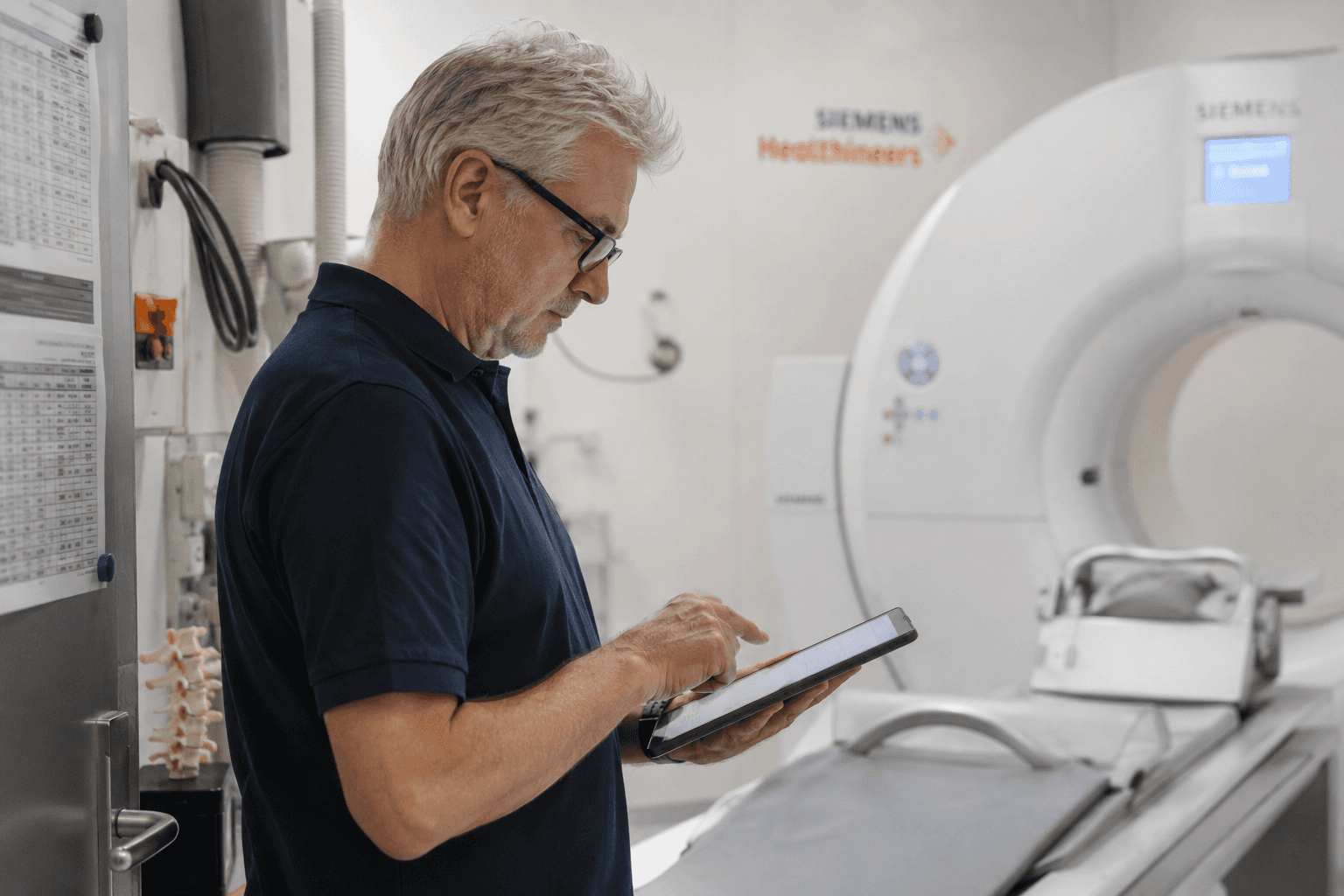
Atrium Medical is an independent service organisation based in Vienna, specialising in the maintenance and repair of diagnostic imaging equipment across hospital networks in the Greater Vienna area. Atrium operates across four sites and serves a growing network of public and private hospitals.
More customer stories
From the same beat — operations, equipment, and the slow business of doing the work without losing the thread.